Monday, May 19, 2008

May 19

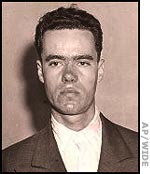
A Cambodian infant by the name of Prek Sbauv was born on this date in 1925. A month short of his 50th birthday, Prek Sbauv -- now known to the world as Pol Pot, leader of the Khmer Rouge movement -- concluded nearly a decade of armed struggle by taking full control of his nation, which he renamed Democratic Kampuchea.

Espousing his own regressive version of Maoist doctrine, Pol Pot insisted that Kampuchea return to the condition of a purely agrarian society in order to purify the Cambodian people and prepare them for collective progress; cities like Phnom Pehn were therefore to be evacuated, and all modern technology was forbidden throughout the country unless approved by the central committee. The Khmer Rouge divided the Cambodian population into three classes -- “full-rights,” “candidates,” and “depositees” (or “New People”). The later category included intellectuals, journalists, Buddhists monks, anyone who had contact with the West, people with glasses, people with disabilities, and ethnic Lao, Chinese and Vietnamese people. It also included everyone living in the regions of the country not controlled by the Khmer Rouge before 1975.

The “New People,” who numbered in the millions, were deemed enemies of Pol Pot’s revolution and were rounded up into camps, separated from their families, subjected to torture and forced labor, deliberately starved and then killed by the hundreds of thousands in mass graves they had dug with their own hands. As the Khmer Rouge explained, “To keep you is no benefit, to destroy you is no loss.” Teeda Mutt Mam, one of the “New People” to survive of the killing fields, has written that
we were not allowed to cry or show any grief when they took away our loved ones. A man would be killed if he lost an ox he was assigned to tend. A woman would be killed if she was too tired to work. Human life wasn’t even worth a bullet. They clubbed us in the back of our necks and pushed us down to smother us and let us die in a deep hole with hundreds of other bodies.

They told us we were void. We were less than a grain of rice in a large pile.
After presiding over well over a million deaths, Pol Pot was dislocated from power when the Vietnamese army invaded in 1979, scattering the Khmer Rouge government. Pol Pot fled to Thailand and then to China, where he lived until the Vietnamese army withdrew from Cambodia in 1989. After returning to his native land, Pol Pot and the remnants of the Khmer Rouge managed to keep government forces at bay until 1997, when he was at last captured and sentenced to lifetime house arrest. On 15 April 1998, after learning that he was to be delivered to an international tribunal and tried for crimes against humanity, Pol Pot died. His body was cremated, however, and not cast into a ditch -- which would certainly have been no less than what he deserved.

Labels:

|

Friday, May 02, 2008

May 2

Leopold II of Belgium formalized his rule over the "Congo Free State" -- surely one of the great misnomers in the history of imperialism -- on this date in 1885. During the previous six years, Sir Henry Morton Stanley had concluded a series of advantageous treaty negotiations with the tribal chiefs of central Africa, whose lands were given over to the king for his personal enrichment. Stanley, quite famously, observed that "the savage only respects force, power, boldness, and decision," advice that Leopold surely took to heart as he spent the next 20 years administering the destruction of millions of people whose homelands he would never visit.

The history of the Congo Free State amounts to one of the great mass murders in human history, as a familiar nexus of racism and economic exploitation was condensed into two decades of systematic atrocity carried out with only the barest pretesnse of "White Man's Burden." Leopold opened parts of the Congo to European entrepreneurs, who purchased the rights to exploit the land for rubber and ivory; in exchange for granting monopoly rights, the Belgian ruler asked only for a 50 percent share in the profits. In the regions of the "Free State" that the king ruled directly, he borrowed from 16th century Spanish conduct in the West Indies and demanded annual production and labor quotas from the locals. The quotas were more than mere recommendations. White deputies of the king, known as the Force Publique, brutalized the various Congolese tribes, enforcing the king's authority over nearly a million square miles of land; the FP also punished interference from Congolese or Arab traders who competed with European merchants. During the "rubber terror," recalcitrant or non-productive tribes were tortured, mutilated and shot. FP conscripts were allowed to submit baskets of severed hands to their commanding officers, "tributes" of a different sort than relieved them of responsibility for failing to extract the quotas from the subject peoples.

Villages were depopulated and burnt to the ground. One member of the FP later testified that in one episode,
[w]e fell upon them all and killed them without mercy ... [Our leader] ordered us to cut off the heads of the men and hang them on the village palisades, also their sexual members, and to hang the women and children on the palisades in the form of a cross.
Between five and fifteen million Congolese died during the 23 years of Leopold's rule, while the king himself absconded with 220 million francs in personal profit, an amount totalling more than a billion dollars in contemporary terms.

By the early years of the new century, word of Leopold's savagery leaked to the European public, who reacted in horror at the revelations of journalists like Edmund Morel or novelists like Joseph Conrad, whose Heart of Darkness was based on his observations as captain of a steamer on the Congo River. Writing about a decade before the king's death, Mark Twain declared that
Leopold has deliberately destroyed more lives than have suffered death on all the battlefields of this planet for the past thousand years. In this vast statement I am well within the mark, several millions of lives with the mark. It is curious that the most advanced and most enlightened century of all the centuries the sun has looked upon should have the ghastly distinction of having produced this moldy and piety-mouthing hypocrite, this bloody monster whose mate is not findable in human history anywhere, and whose personality will surely shame hell itself when he arrives there--which will be soon, let us hope and trust.
Investigations by European governments eventually persuaded the Belgian parliament to wrest control from Leopold in 1908. The damage, however, had already been done. Not only had Leopold destroyed tens of millions of lives while depleting the wealth of a continent, but his entrepreneurial imperialism accelerated the European quest for African lands -- a competitive cycle that would bring devastating consequences for hundreds of millions more, including Europeans themselves. By 1914, the bearers of "civilization" -- driven mad by nationalism and imperial competition -- paused for a moment and began slaughtering one another for a change.

Leopold II, sadly, was not around to witness the fruits of his effort to subdue the Congo. By the time the Germans occupied most of his country, Leopold had been dead for five years.

Labels: ,

|

Monday, March 17, 2008

March 17

Eight years ago today, more than 530 people -- mostly women and children -- were burnt to death in a chapel in the remote town of Kanungu, Uganda. The victims were members of a Christian cult known as the Movement for the Restoration of the Ten Commandments of God, a group that had formed during the late 1980s under the leadership of a Catholic madman named Joseph Kibwetere. Kibwetere had been a prominent religious and political leader during the long years Ugandans spent under the grotesque rule of Idi Amin; when the former Ugandan president Milton Obote returned to power in 1980, Kibwetere was forced from his home district of Ntungamo.

Kibwetere eventually founded the MRTC with the assistance of several other former Catholic priests and a former prostitute and banana beer brewer named Credonia Mwerinde. After relocating several times, the group settled in Kanungu and lived communally, surviving on the revenues brought by the pineapple and banana plantations they had purchased. Together, this core group developed a sect based on what they claimed to be the true intent of the Mosaic commandments. MRTC members dressed in green, white or black robes and lived under conditions of extraordinary austerity. Kibwetere -- who claimed to have communicated directly with the Virgin Mary -- insisted that followers refrain from sex and alcohol. Fasting was a constant feature of the movement culture, and residents of the community were eventually forbidden from speaking except during prayers and song. All other communications were delivered through hand signals. By the late 1990s, anywhere from 1000-4000 people had joined the Movement for the Restoration.

No one knows whether God spoke to Kibwetere and Mwerinde through hand signals, but in 1999, the cult’s newspaper announced that a divine prophecy had been revealed to the cult’s leaders and that the world would soon be ending. Community members began disposing of their worldly possessions in preparation for the day of doom, which was verified to be December 31, 1999.

When the new year arrived with little fanfare -- and without the promised global catastrophe -- members of the cult were greatly dismayed. Two months later, as complaints mounted and dissenters roiled, a new doomsday was scheduled for sometime between March 6-18. On the 17th, hundreds of unsuspecting worshippers gathered at an old chapel, whose floors and pews had already been soaked in gasoline and sulfuric acid. After the chapel was packed to capacity, its doors and windows were locked and barred from the outside -- by whom no one has ever determined -- and the entire building set on fire. No one survived. Forensic evidence later indicated that many of the victims had been clubbed, poisoned or hacked to death before the fire began. The leaders of the MRTC are presumed to have died in the fire as well.

Over the next few weeks, hundreds of additional bodies turned up in villages and mass graves across the country. Nearly all of them had been poisoned.

Labels: ,

|

Monday, January 21, 2008

January 21

Today is the Feast of St. Agnes, when Roman Catholics honor the most important of the virgin martyrs. According to legend, Agnes of Rome, a young Christian girl twelve or thirteen years of age, was executed on this date sometime in the third or fourth century anno domini. Agnes' transgression, evidently, was to refuse an offer of marriage from the son of a Roman prefect; when she refused, the prefect ordered her to be raped, tortured and burnt at the stake. In one account by the fourth-century Roman Catholic poet and hymnist Aurelius Prudentius Clemens, one of her would-be violators was stricken blind and comatose when he cast a lewd eye upon her. Thus, while her virginity was spared, Agnes' life was not. At her execution, the wood surrounding her body failed to ignite. According to the fourth-century account by St. Ambrose -- included in his three-part meditation de virginis ("Concerning Virgins") -- Agnes greeted her death without hesitation:
She stood, she prayed, she bent down her neck. You could see the executioner tremble, as though he himself had been condemned, and his right hand shake, his face grow pale, as he feared the peril of another, while the maiden feared not for her own. You have then in one victim a twofold martyrdom, of modesty and of religion. She both remained a virgin and she obtained martyrdom.
Although the conventional accounts of her execution are ghastly, little is actually known of Agnes' life aside from its brevity. Traditionally, her execution was believed to have occurred during the Diocletian persecutions, sometime around the year 304 or 305; other evidence, however, suggests that her martyrdom may have occurred some years before during the reign of Gaius Decius, a half century or more prior to Diocletian. Regardless of her date of death, Agnes came to be known as the patron saint of young girls. He body was placed in sepulchre, and during the reign of Constantine St. Agnes was honored with a basilica constructed around her final resting place. She remains there to this day.

***

A man of considerably less sanctity than Agnes, Howard Unruh, turns 87 today in the Trenton Psychiatric Hospital. He has been there since 1949, when the unemployed World War II tank soldier shot up his pleasant Camden, New Jersey neighborhood on September 6 of that year. Unruh believed his neighbors were talking about him behind his back, and he soon began to compile a hit list of local enemies. When someone stole a new gate he had installed at his mother's house -- where he still lived -- Unruh at last snapped and decided to shoot everyone on his roster. He carried out his plan the next morning after a breakfast of fried eggs, although he did not exactly stick to the list. In twelve minutes, he managed to shoot 26 people, half of whom died. And so it was that Howard Unruh became the first single-episode mass murderer in United States history.

"I'm no psycho," he told an investigator. "I have a good mind. I'd have killed a thousand if I had bullets enough."

Labels: ,

|

Tuesday, December 18, 2007

December 18

Poster08On 18 December 1878, a child was born to a peasant family in Gori, Georgia, which was at the time part of the vast terrain of the Russian Empire. Josef Vissarionovich Dzhugashvili, as the baby was named on that day, would eventually distinguish himself as one of the most ghastly human beings to soil the historical record of the 20th century. By the age of 17, little Josef had established himself as a competent seminarian and an aspiring Georgian poet, offering up pleasant and subtly anti-Tsarist reflections on the landscapes of his youth. When he became a revolutionary, he ceased writing poetry forever.

Perhaps it was the near-daily beatings he absorbed at the hands of his father, an alcoholic craftsman displaced by the march of industrialization; perhaps his mother's sexual dalliances humiliated him to the core of his being; perhaps the deaths of his only three siblings established the morbid tone for his life; or perhaps, as the Vatican's chief exorcist recently claimed, he was possessed by the Devil. Whatever the explanation, "Stalin" -- as the infant would eventually come to call himself -- eventually presided over the deaths of millions of fellow Georgians as well as Russians, Latvians, Kazakhs, Ukrainians, Poles, Volga Germans, Crimean Tatars, Kalmyks, Chechens, Ingush, Balkars, Karachays, Meskhetian Turks, Finns, and other ethnic and national groups suppressed on behalf of the Soviet state. The precise numbers killed, displaced, and tortured during Stalin's rule will of course never be known. It is a grotesque testimony to his inhumanity, however, that estimates of the dead range from 800,000 to nearly 60 million -- these being mere "statistics," as Stalin himself infamously noted.

Known by such absurdist, sycophantic nicknames as the "Coryphaeus of Science," the "Father of Nations," the "Brilliant Genius of Humanity," the "Gardener of Human Happiness," Joseph Stalin contorted science to fit his own ideological demands; made orphans of nations across Eastern Europe and Central Asia; wrote almost nothing that rose above the level of pedestrian Marxian theory; and cultivated near-universal despair for decades. In 1934, his verbal abuse at a dinner party drove his second wife, Nadya Allilueva, to suicide. As for Stalin himself, he expired from a massive stroke on 5 March 1953. Most of his final day was spent alone on the floor of his dacha, where he lay partly paralyzed and unable to call for assistance, or to tell anyone that he had soiled himself. If he was not in fact poisoned -- as has sometimes been alleged -- he probably should have been.

Labels: , ,

|

Monday, August 20, 2007

August 20

On this date in 1986, 44-year-old Patrick Henry Sherrill -- a surly, part-time mail carrier from Edmond, Oklahoma -- killed fourteen co-workers in an episode that solidified the reputation of the US Postal Service as a cauldron of workplace violence. Known to many as “Crazy Pat,” Sherrill had failed at nearly every venture in his life before the Edmund Massacre. A poor student, he had made several unsuccessful attempts at college; a stint in the Marines ended with a general discharge but nothing in the way of a career. He did, however, distinguish himself as an expert with a pistol.

After his time with the Marines, Sherrill returned to live with his mother in Oklahoma, where a series of odd jobs kept Sherrill afloat while his odd behavior and unpleasant demeanor resulted in one dismissal after another. During the years leading up to the mass murder for which he would become famous, Sherrill’s conduct was nothing short of disturbing. The least worrisome of his quirks included his habit of mowing the lawn in the middle of the night; less endearing was his compulsion to peer in his neighbors’ windows and steal their dogs, which he then pitted in fights against his pit bull.

On August 19, 1986, Sherrill’s supervisors -- Bill Bland and Rick Esser -- reprimanded him. Sherrill, who had been written up twice and suspended earlier in the year, had been complaining to fellow employees for weeks, insisting that Bland and Esser were looking to fire him. To one co-worker, Sherrill ominously remarked that “they’ll be sorry everyone would know.”

The next day, Sherrill brought two semi-automatic .45 pistols and a .22 to work. After locking the door behind him, he began shooting everyone in sight. Within 15 minutes, “Crazy Pat” had taken fourteen lives and wounded a half dozen more before ending the spree with a bullet to his own head. Rick Esser was indeed numbered among the dead; Bill Bland, however, overslept and was not in the office when Patrick Sherrill arrived.

True to its legendary persistence, the Post Office in Edmund -- scrubbed and emptied of the dead and wounded -- opened for business the next morning.

Labels:

|

Thursday, July 19, 2007

July 19

Lizzie Andrew Borden emerged into the world on this date in 1860; about three weeks after her 32nd birthday, Borden discovered the body of her father, Andrew, on a couch in their home at Fall River, Massachusetts. Contrary to popular rhyme, Mr. Borden had not suffered “forty-one” whacks with a hatchet. The eleven he did sustain, however, were quite fatal -- including the one that split his eye and another than severed his nose. The body of Abby Borden, which bore nineteen distinct wounds to the head and neck, was discovered upstairs in her bed a short while later.

Lizzie Borden, who was always the most likely suspect, was charged with the murders and acquitted by an all-male jury in June 1893.

Less fortunate in their own trials, five women from the town of Salem, Massachusetts -- Rebecca Nurse, Susannah Martin, Elizabeth Howe, Sarah Good and Sarah Wildes -- were hanged for witchcraft on 19 July 1692. Nurse, who hailed from a prominent family and was one of the most respected women in the community, had been accused by one Sarah Holton of putting a lethal hex upon her husband, Benjamin, several years before. According to Holton, Nurse came to their farmhouse one Saturday and scolded Benjamin about his pigs, which she claimed had gotten into her fields. The argument went nowhere, as Benjamin Holden insisted his pigs were adequately yoked and had not left their pen. After Nurse left, Sarah Holden claimed, her husband
was taken with a strainge fitt . . . being struck blind and stricken down two or three times so that when he came to himself he tould me he thought he should never have com into the house any more: and all summer affter he continewed in a languishing condition being much pained at his stomack and often struck blind: but about a fortnight before he dyed he was taken with strange and violent fitts acting much like out poor bewicthed parsons when we thought they would have dyed and the Doctor. that was with him could not find what his distemper was: and the day before he dyed he was very chearly but about midnight he was againe most violently sezed upon with violent fitts tell the next night about midnight he departed this life by a cruel death.
On the basis of these and other implausible scraps of “evidence,” Nurse was arraigned and charged with the crime of witchcraft. Tried by a jury, she was initially acquitted on June 30. When the verdict was announced, 12-year-old Ann Putnam and several other girls who had brought forth accusations against Nurse collapsed and howled in pain, insisting that Nurse was somehow afflicting them. The judge then asked the jury to reconsider their decision, which they subsequently did.

Fourteen years after helping to send twenty people to an early grave, Ann Putnam apologized publicly for her role in the witchcraft hysteria. She had, she ruefully observed, been “deluded by Satan.”

Labels: , , ,

|

Wednesday, July 18, 2007

July 18

On 18 July 1971, on the 1,907th anniversary of the Great Roman Fire, my wife was born; she shares her birthday with Hunter S. Thompson, who blew his brains out with a rifle in the fall of 2005. On Hunter Thompson’s 12th birthday in 1925, the memoirs of a German prisoner named Adolf Hitler appeared in print for the first time. Among other subjects, Mein Kampf mused at length about something the author described as “the Jewish peril.”

On July 18, 1982 the President of Guatemala, Gen. Rios Montt, explained his own stark domestic policies to a nation that was enduring its fourth decade of civil war. “If you are with us,” Gen. Montt explained, “we'll feed you; if not, we'll kill you.” Indeed, during his two-year rule, Gen. Montt’s paramilitary death squads killed tens of thousands of mostly indigenous Guatemalans who insisted on feeding themselves. Among those who died at Montt’s hands were hundreds of villagers at Plan de Sanchez, who were cut down just hours after Mott’s callous remarks.

According to a 2004 report on the massacre by the Inter-American Court on Human rights, Montt’s forces
separated the children and the young women aged from about 15 to 20. Then the massacre began. First they tortured the old people, saying they were guerrillas, then they threw two grenades and fired their guns. Finally they sprayed petrol around and set fire to the house… [The next day, Buenaventura Manuel Jeronimo] emerged from his hiding place to see the destruction they had caused. Along with Eulalio Grave Ramírez and his brothers Juan, Buenaventura, and Esteban, they put out the flames that were still consuming the bodies. Those that weren't totally charred showed signs of torture, as did the naked bodies of the youngest women.
Jeronimo told a reporter two decades later that the terror continued for days after the killings stopped:
We survivors hid in the forests those nights, as soldiers were still patrolling, looking for any villager they could find. In the night, dogs would come and eat at the bodies of our loved ones. We would try and bury them, but we didn't have enough time, and still the dogs would come, dig them up, and eat at them.
Predictably, US president Ronald Reagan celebrated the anti-communist sensibilities of Gen. Montt, who was an evangelical Christian minister and a personal friend of both Jerry Falwell and Pat Robertson.

“President Ríos Montt,” Reagan explained, “is a man of great personal integrity and commitment . . . . I know he wants to improve the quality of life for all Guatemalans and to promote social justice.”

Two years after the Plan de Sanchez massacre, a mentally distressed, unemployed security guard named James Oliver Huberty told his wife that “society had its chance” before leaving their house just before 4:00 p.m. on July 18, 1984. Carrying two semiautomatic weapons and a shotgun, Huberty then walked into a McDonald’s restaurant in San Ysidro, California and opened fire. After 77 minutes and nearly 300 rounds of ammunition, 21 people were dead and 19 others wounded. The killings ended when a police sniper shot Huberty in the head. At the time, it was the worst mass killing by a single gunman in US history.

Labels: ,

|

Friday, May 18, 2007

May 18

Four days after Nikolai Alexandrovich Romanov was coronated Nicholas II, Emperor and Autocrat of All the Russias, a massive festival in his honor turned into a deadly stampede. Drawn by promises of free beer and gifts, as many as half a million people gathered at Khodynka Field, just northwest of Moscow, in the early morning hours of 18 May 1896 (by the Julian calendar, which Russia still used). Amazingly, officials assigned a little more than a dozen men to keep the crowd orderly. When rumors spread that insufficient quantities of beer were available, the crowd began to surge forward in the direction of the 150 buffet tables and 20 pubs that had been constructed for the occasion. In the panic that ensued, more than 1300 people were crushed and suffocated.

The Khodynka tragedy cast a call over the entire reign of Russia’s last tsar. Vladimir Lenin among other revolutionaries and opponents of Nicholas II referred to him as the “Khodynka Tsar” and “Bloody Nicholas,” a nickname that applied especially well in July 1917, when Bolshevik revolutionaries executed him and his entire family.

***

More than 30 years after the Khodynka stampede, a disgruntled Michigan farmer named Andrew Kehoe beat his wife to death, set his house alight, then blew up the north wing of the Bath Consolidated School, instantly killing 36 children and two teachers. Kehoe, a member of the Bath County school board, was disgruntled over the property taxes levied to pay for the facilities, which he blamed for the impending foreclosure of his farm. His efforts to reduce the property taxes were not successful, however. Determined to avenge his largely self-inflicted economic misfortunes, Kehoe began in the summer of 1926 to stockpile more than a ton of pyrotol, an explosive introduced during World War I. He also bought several boxes of dynamite. As a school board member and school handyman, Kehoe had complete access to the school and packed the explosives into the basement sometime during the months leading up to the event.

On the morning of May 18, Kehoe destroyed his own barn with firebombs, killing all of the livestock who were trapped inside. As firefighters rushed to the scene, half of the explosives in the schoolhouse detonated. One of Kehoe’s neighbors, M.J. Ellsworth, wrote a book about the bombing and described the morning’s horrors
There were sights that I hope no one will ever have to look at again. Children would be brought out, some with legs dropping, some with arms broken and hanging, some would be moaning, and others would be still. When carrying them, you would know they would never answer their mother's call again. They were all hard to recognize when they were first brought out because they were covered with plaster and cement -- and nearly all bleeding to a certain extent.

I saw one mother, Mrs. Eugene Hart, sitting on the bank a short distance from the school with a little dead girl on each side of her and holding a little boy, Percy, who died a short time after they got him to the hospital.
As more than a hundred townspeople combed the wreckage for survivors and the dead, Kehoe arrived on the scene in his car, which he had packed with dynamite, dismantled farm equipment, tools and scrap metal. Using a shotgun to detonate the explosives, Kehoe blew himself and four other people to smithereens.

Kehoe’s body landed a short distance from the wrecked car and was later buried in an unmarked grave. The funerals of his victims drew thousands of mourners from across the state.

Labels: ,

|

Wednesday, May 02, 2007

May 2

Leopold II of Belgium formalized his rule over the "Congo Free State" -- surely one of the great misnomers in the history of imperialism -- on this date in 1885. During the previous six years, Sir Henry Morton Stanley had concluded a series of advantageous treaty negotiations with the tribal chiefs of central Africa, whose lands were given over to the king for his personal enrichment. Stanley, quite famously, observed that "the savage only respects force, power, boldness, and decision," advice that Leopold surely took to heart as he spent the next 20 years administering the destruction of millions of people whose homelands he would never visit.

The history of the Congo Free State amounts to one of the great mass murders in human history, as a familiar nexus of racism and economic exploitation was condensed into two decades of systematic atrocity carried out with only the barest pretesnse of "White Man's Burden." Leopold opened parts of the Congo to European entrepreneurs, who purchased the rights to exploit the land for rubber and ivory; in exchange for granting monopoly rights, the Belgian ruler asked only for a 50 percent share in the profits. In the regions of the "Free State" that the king ruled directly, he borrowed from 16th century Spanish conduct in the West Indies and demanded annual production and labor quotas from the locals. The quotas were more than mere recommendations. White deputies of the king, known as the Force Publique, brutalized the various Congolese tribes, enforcing the king's authority over nearly a million square miles of land; the FP also punished interference from Congolese or Arab traders who competed with European merchants. During the "rubber terror," recalcitrant or non-productive tribes were tortured, mutilated and shot. FP conscripts were allowed to submit baskets of severed hands to their commanding officers, "tributes" of a different sort than relieved them of responsibility for failing to extract the quotas from the subject peoples.

Villages were depopulated and burnt to the ground. One member of the FP later testified that in one episode,
[w]e fell upon them all and killed them without mercy ... [Our leader] ordered us to cut off the heads of the men and hang them on the village palisades, also their sexual members, and to hang the women and children on the palisades in the form of a cross.
Between five and fifteen million Congolese died during the 23 years of Leopold's rule, while the king himself absconded with 220 million francs in personal profit, an amount totalling more than a billion dollars in contemporary terms.

By the early years of the new century, word of Leopold's savagery leaked to the European public, who reacted in horror at the revelations of journalists like Edmund Morel or novelists like Joseph Conrad, whose Heart of Darkness was based on his observations as captain of a steamer on the Congo River. Writing about a decade before the king's death, Mark Twain declared that
Leopold has deliberately destroyed more lives than have suffered death on all the battlefields of this planet for the past thousand years. In this vast statement I am well within the mark, several millions of lives with the mark. It is curious that the most advanced and most enlightened century of all the centuries the sun has looked upon should have the ghastly distinction of having produced this moldy and piety-mouthing hypocrite, this bloody monster whose mate is not findable in human history anywhere, and whose personality will surely shame hell itself when he arrives there--which will be soon, let us hope and trust.
Investigations by European governments eventually persuaded the Belgian parliament to wrest control from Leopold in 1908. The damage, however, had already been done. Not only had Leopold destroyed tens of millions of lives while depleting the wealth of a continent, but his entrepreneurial imperialism accelerated the European quest for African lands -- a competitive cycle that would bring devastating consequences for hundreds of millions more, including Europeans themselves. By 1914, the bearers of "civilization" -- driven mad by nationalism and imperial competition -- paused for a moment and began slaughtering one another for a change.

Leopold II, sadly, was not around to witness the fruits of his effort to subdue the Congo. By the time the Germans occupied most of his country, Leopold had been dead for five years.

Labels: , ,

|